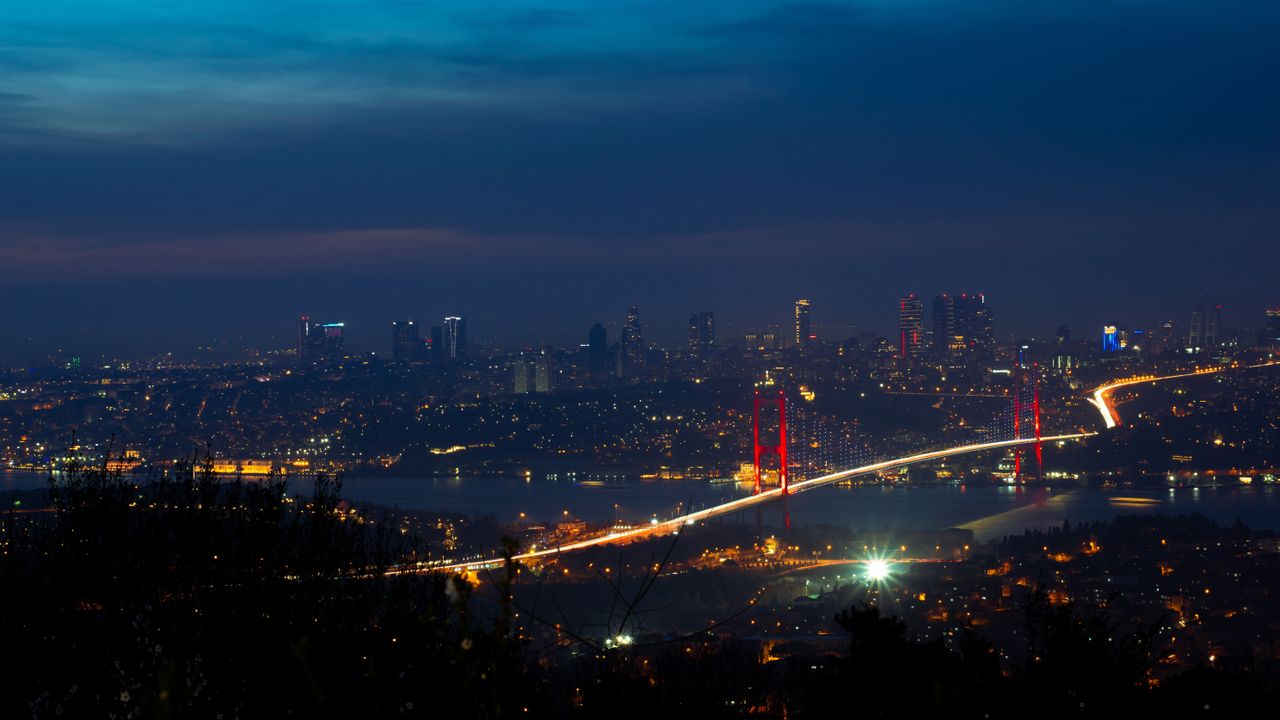
What January feels like in Istanbul
January is the coldest stretch of winter in Istanbul. Afternoons feel chilly — fine for exploring on foot if you are dressed for it. Little changes after sunset — nights are cold, only slightly below the daytime level. The air is damp, which makes cool temperatures feel colder, particularly in wind.
Rain in Istanbul in January
Rain is part of normal life this month, falling on about one day in 2. Wet days average about 7.4 mm (0.3 in), enough to soak you without an umbrella. Across the year Istanbul averages about 7 mm per rainy day, so January is typical. January is Istanbul's wettest month of the year.
Daylight and sunshine in January
In mid-January, sunrise is at about 8:27 am and sunset at about 5:59 pm (local time) — 9 h 32 min of daylight. Days are getting longer: 17 min more daylight than in mid-December. About 61% of daylight hours are sunny; in short, there are plenty of bright spells.
How January compares to the rest of the year
Ranked by average high, January comes out as the coolest month in Istanbul. Afternoons run 2.2°C (4°F) cooler than in December, with 4 mm more rain. This is the low point, and February starts to warm up. The next month's average high: 9.7°C (49.5°F).
Who January suits
- Sightseeing: less ideal — it is cold for long walks.
- Parks & outdoor: less ideal — too cool to sit outside for long.
- Beach: less ideal — the sea air is too cool.
Tips for visiting Istanbul in January
Rain Protection
Keep a small umbrella in your bag and wear shoes that cope with puddles.
Warm Layers
A warm jacket, a hat and gloves for cold mornings and evenings.
Quick questions
How warm is Istanbul in January?
It feels chilly: typical highs are 8.9°C (48°F), with lows near 4°C (39.2°F).
Does it rain a lot in Istanbul in January?
Quite a lot — 96 mm spread over about 13 days.
What should I wear in Istanbul in January?
Pack rain protection and warm layers. There is little need to change for the evening.
Is January or February better for visiting Istanbul?
On our 12-month climate ranking, February comes out ahead (#10 of 12 vs #12). February has fewer rainy days.